public void execute(Runnable command) {
    if (command == null)
        throw new NullPointerException();
    /*
     * Proceed in 3 steps:
     *
     * 1. If fewer than corePoolSize threads are running, try to
     * start a new thread with the given command as its first
     * task.  The call to addWorker atomically checks runState and
     * workerCount, and so prevents false alarms that would add
     * threads when it shouldn't, by returning false.
     *
     * 2. If a task can be successfully queued, then we still need
     * to double-check whether we should have added a thread
     * (because existing ones died since last checking) or that
     * the pool shut down since entry into this method. So we
     * recheck state and if necessary roll back the enqueuing if
     * stopped, or start a new thread if there are none.
     *
     * 3. If we cannot queue task, then we try to add a new
     * thread.  If it fails, we know we are shut down or saturated
     * and so reject the task.
     */
    int c = ctl.get();
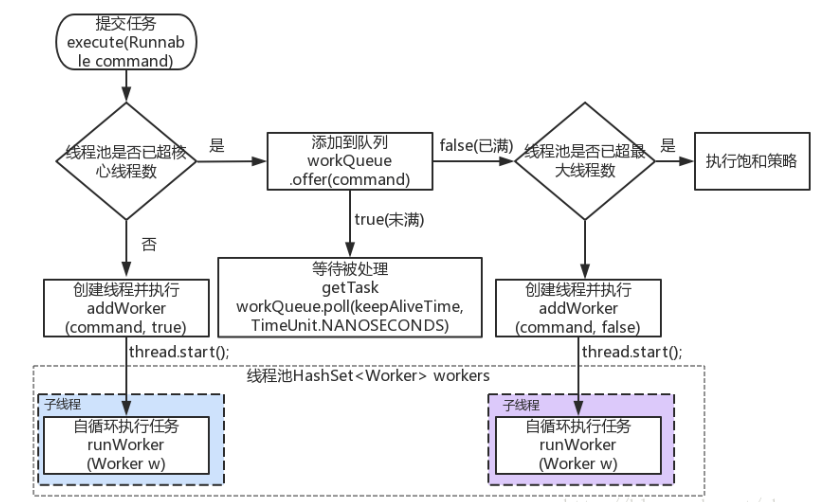
    // 判断有没有达到核心线程数,没达到直接调用addWorker方法,增加线程数
    if (workerCountOf(c) < corePoolSize) {
        if (addWorker(command, true))
            // 直接加worker成功,直接返回即可
            return;
        c = ctl.get();
    }
    // addWorker失败,可能的原因有
    //   1. 线程池状态不是running了
    //   2. 外部并发调用execute,导致worker数量已经超过了corePoolSize
    // 所以对线程池进行状态检查,并将任务加入队列
    if (isRunning(c) && workQueue.offer(command)) {
        // 任务入队的时候,线程池状态可能发生变化,所以需要再次检查
        // 如果再次检查发现线程池状态不是running了,需要将刚加进去的任务移除掉,并调用reject方法
        int recheck = ctl.get();
        if (! isRunning(recheck) && remove(command))
            reject(command);
        else if (workerCountOf(recheck) == 0)
            // 如果线程池还是running,但是没有线程运行任务了,需要补偿一个worker
            addWorker(null, false);
    }
    else if (!addWorker(command, false))
        // 如果队列满了 加入队列失败,需要增加一个非核心worker
        // 如果增加成功,就没什么问题,如果增加失败,调用reject
        reject(command);
}
private boolean addWorker(Runnable firstTask, boolean core) {
    retry:
    for (;;) {
        //循环调用以下流程
        // 1. 判断线程池状态
        // 2. 获取当前worker数量
        // 满足线程条件,增加workerCnt,并继续往下创建线程
        int c = ctl.get();
        int rs = runStateOf(c);

        // Check if queue empty only if necessary.
        if (rs >= SHUTDOWN &&
                ! (rs == SHUTDOWN &&
                        firstTask == null &&
                        ! workQueue.isEmpty()))
            return false;

        for (;;) {
            int wc = workerCountOf(c);
            if (wc >= CAPACITY ||
                    wc >= (core ? corePoolSize : maximumPoolSize))
                return false;
            if (compareAndIncrementWorkerCount(c))
                break retry;
            c = ctl.get();  // Re-read ctl
            if (runStateOf(c) != rs)
                continue retry;
            // else CAS failed due to workerCount change; retry inner loop
        }
    }
    //开始创建worker流程
    boolean workerStarted = false;
    boolean workerAdded = false;
    Worker w = null;
    try {
        w = new Worker(firstTask);
        final Thread t = w.thread;
        if (t != null) {
            final ReentrantLock mainLock = this.mainLock;
            mainLock.lock();
            try {
                // Recheck while holding lock.
                // Back out on ThreadFactory failure or if
                // shut down before lock acquired.
                int rs = runStateOf(ctl.get());

                if (rs < SHUTDOWN ||
                        (rs == SHUTDOWN && firstTask == null)) {
                    if (t.isAlive()) // precheck that t is startable
                        throw new IllegalThreadStateException();
                    workers.add(w);
                    int s = workers.size();
                    if (s > largestPoolSize)
                        largestPoolSize = s;
                    workerAdded = true;
                }
            } finally {
                mainLock.unlock();
            }
            if (workerAdded) {
                t.start();
                workerStarted = true;
            }
        }
    } finally {
        //如果运行worker失败,需要减少workerCnt
        if (! workerStarted)
            addWorkerFailed(w);
    }
    return workerStarted;
}
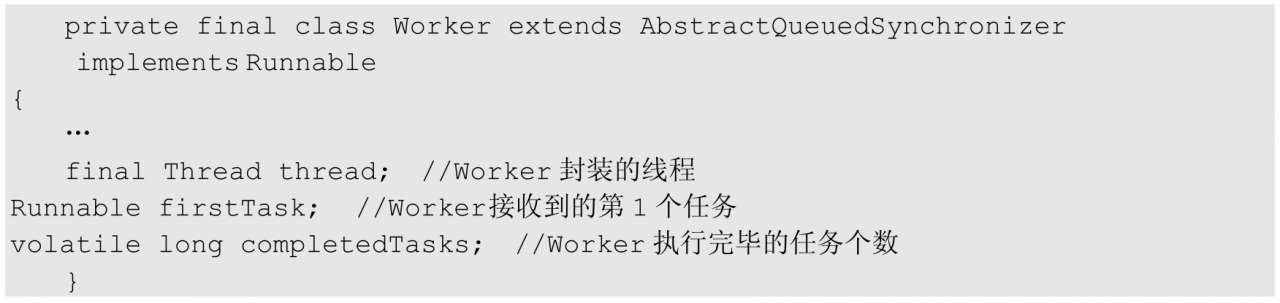
private final class Worker extends AbstractQueuedSynchronizer implements Runnable { /** * This class will never be serialized, but we provide a * serialVersionUID to suppress a javac warning. */ private static final long serialVersionUID = 6138294804551838833L;
/** Thread this worker is running in. Null if factory fails. */ final Thread thread; /** Initial task to run. Possibly null. */ Runnable firstTask; /** Per-thread task counter */ volatile long completedTasks;
/** * Creates with given first task and thread from ThreadFactory. * @param firstTask the first task (null if none) */ Worker(Runnable firstTask) { setState(-1); // inhibit interrupts until runWorker this.firstTask = firstTask; this.thread = getThreadFactory().newThread(this); }
/** Delegates main run loop to outer runWorker */ public void run() { runWorker(this); }